










How Maschinenring Mining Lowers Costs Through Shared Resources and Smarter Operations
Maschinenring Mining is a cooperative mining service concept that shares machinery, labour, and technical resources to reduce costs and improve efficiency. Originating from German agricultural...

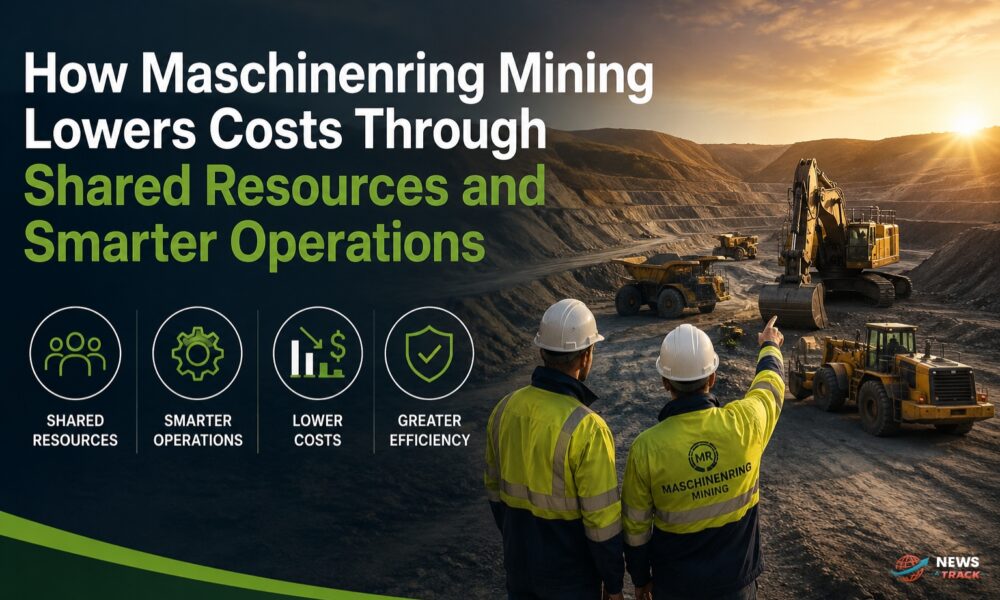
Maschinenring Mining is a cooperative mining service concept that shares machinery, labour, and technical resources to reduce costs and improve efficiency. Originating from German agricultural cooperatives in the 1960s, this shared-resource model connects small and medium mining operators to expensive equipment and skilled workers, minimizing capital waste and environmental impact.
Table Of Content
- Where did the Maschinenring Mining concept originally come from?
- What are the key financial and operational benefits of Maschinenring Mining?
- How does resource sharing reduce capital expenditure?
- Why is operational flexibility critical for modern miners?
- How does cooperative mining improve environmental sustainability?
- How does a cooperative mining service share machinery and labor in practice?
- What types of heavy machinery are shared?
- How are skilled workers coordinated across sites?
- How are European mining operators succeeding with Maschinenring Mining today?
- What are the main challenges of implementing Maschinenring Mining?
- How do networks manage scheduling conflicts?
- Who assumes legal liability for shared equipment?
- How is trust maintained among competitors?
- How will digital technology shape the future of Maschinenring Mining?
- Frequently Asked Questions (FAQ)
- What exactly does the term Maschinenring mean?
- Who benefits most from a cooperative mining model?
- What are the main risks of sharing mining machinery?
- Can this model completely replace owning mining equipment?
- Are there alternatives to Maschinenring Mining?
- Start optimizing your mining operations today
The mining sector demands heavy capital investment. Excavators, loaders, drilling machines, and haul trucks require millions of dollars in upfront funding. Operators also face rising operational expenses, stricter environmental regulations, and persistent labor shortages. Buying and maintaining a proprietary fleet of equipment makes financial sense when a site operates at peak capacity, but machinery often sits idle during project transitions. This idle time drains budgets through depreciation, storage, and maintenance costs.
A new operational framework is gaining traction to solve this exact problem. Maschinenring Mining offers a structured, cooperative network designed to optimize how companies access heavy machinery and skilled personnel. Instead of purchasing every piece of required equipment, operators tap into a shared pool of resources.
This comprehensive guide explores how Maschinenring Mining functions as a cooperative mining service concept. You will learn how this approach minimizes financial risk, drives operational flexibility, and supports modern sustainability goals. By understanding the mechanics of this model, mining operators can make informed decisions about how to scale their projects without taking on unnecessary debt.
Where did the Maschinenring Mining concept originally come from?
The term “Maschinenring” translates to “machine ring” in German. The concept originated in Bavaria, Germany, during the late 1950s and early 1960s [Futures Bytes, 2026]. Initially, agricultural communities developed these cooperative networks to help small farmers access expensive tractors and harvesting equipment. Purchasing heavy machinery individually was financially inefficient for a single farm, so farmers pooled their resources. Members could borrow or rent machines from each other at a significantly lower cost than buying them outright.
Because the system drastically reduced equipment downtime and improved overall productivity, the model quickly expanded beyond agriculture. Industries that experience seasonal workloads and rely heavily on heavy machinery, such as forestry, landscaping, and construction, adopted the framework [Fact News, 2026].
Eventually, the concept transitioned into the extraction industry. Maschinenring Mining adapts the foundational principles of the agricultural machine rings to the highly complex, capital-intensive world of modern mining. Today, this cooperative mining service operates across Europe, with active networks in Germany, Austria, and Switzerland providing tailored support for local quarries and large-scale extraction sites [Fact News, 2026].
What are the key financial and operational benefits of Maschinenring Mining?
Mining operators must constantly balance output goals with strict budgetary limits. Maschinenring Mining provides several distinct advantages for companies willing to transition from ownership to a cooperative model.
How does resource sharing reduce capital expenditure?
The primary advantage of Maschinenring Mining is significant cost reduction. Mining companies gain access to expensive machinery without bearing the full burden of ownership costs [Newsatrack, 2026]. Choose this model if lowering your capital expenditure (CapEx) matters more than owning a dedicated, proprietary fleet. By renting an excavator or crusher only for the specific weeks it is needed, companies free up capital for site development, safety improvements, or exploration.
Why is operational flexibility critical for modern miners?
Mining projects change rapidly due to shifting weather patterns, permitting delays, and fluctuating commodity prices. Shared resources help companies respond faster to these variables. If a site unexpectedly requires extra loaders to clear a rockfall, the cooperative network arranges immediate support. This flexibility allows small and medium-sized operators to scale their operations up or down without making long-term financial commitments to equipment they may only need temporarily.
How does cooperative mining improve environmental sustainability?
Sustainability targets are now a core component of industrial planning. Maschinenring Mining supports environmental sustainability by reducing unnecessary machinery production. According to Fact News [2026], when multiple companies share one machine instead of each buying their own, fewer machines are manufactured. This lowers the heavy carbon emissions associated with industrial manufacturing, steel production, and long-term storage. Furthermore, shared logistics and careful network scheduling reduce fuel waste and prevent redundant machine transportation between distant sites [Futures Bytes, 2026].
How does a cooperative mining service share machinery and labor in practice?
Maschinenring Mining operates through precise coordination and centralized resource management. Participating businesses register their available resources within a network. These resources include heavy machines, specialized workers, transport vehicles, and repair teams. When a member needs specific support, the network matches their demand with the available supply.
What types of heavy machinery are shared?
The cooperative model covers a wide range of extraction and site development tools. Members typically share excavators, bulldozers, drilling rigs, crushers, haul trucks, loaders, pumps, and safety vehicles [Newsatrack, 2026; Futures Bytes, 2026]. Instead of an operator buying a crusher that sits idle for six months a year, the network schedules that crusher to move between three different regional sites, ensuring it operates near maximum capacity.
How are skilled workers coordinated across sites?
A cooperative mining service concept also shares labor and technical resources to reduce costs. Mining relies heavily on experienced professionals to ensure safety and productivity. The Maschinenring network maintains a pool of trained personnel, including heavy machine operators, mechanics, geologists, surveyors, and safety specialists. Smaller operators can hire these experts for short-term projects, seasonal work, or emergency repairs, providing them with top-tier talent without the overhead of full-time salaries.
How are European mining operators succeeding with Maschinenring Mining today?
The practical application of Maschinenring Mining is already showing strong results across the European continent. Germany remains the operational hub for this cooperative approach, but active networks in Austria and Switzerland are demonstrating the model’s adaptability [Fact News, 2026].
In regional operations, such as Alpine quarries or Eastern European extraction sites, operators use the network for highly specific tasks. For example, a mid-sized quarry might lack the specialized snow-clearing equipment needed to keep roads open during heavy winter storms. Through the local Maschinenring chapter, the quarry can access road maintenance machinery and logistics coordination specifically for the winter months. This keeps the supply chain moving and local economies thriving, as workers in the network often come from nearby communities, keeping wages circulating within rural areas [Fact News, 2026].
What are the main challenges of implementing Maschinenring Mining?
While the benefits are substantial, transitioning to a shared-resource framework requires overcoming several logistical and legal hurdles.
How do networks manage scheduling conflicts?
If multiple mining companies request the same drilling rig simultaneously, the network must enforce fair priority rules. Poor planning or a lack of available backup machinery can cause severe project delays. Networks solve this by using advanced digital scheduling tools that track real-time machine locations and project timelines.
Who assumes legal liability for shared equipment?
Mining involves significant physical risks. Contracts within the Maschinenring network must explicitly define who is responsible for equipment damage, worker injuries, insurance coverage, and environmental compliance [Futures Bytes, 2026]. Clear, standardized service agreements are required to protect both the equipment owner and the renting operator. Choose a localized cooperative network only if they provide transparent, legally binding frameworks for dispute resolution and insurance claims.
How is trust maintained among competitors?
A successful cooperative model relies on mutual trust. Companies must trust that a rented bulldozer will be returned in excellent condition and that shared workers will strictly follow site-specific safety protocols. Regular maintenance audits and strict membership qualification standards help build this necessary trust among participants.
How will digital technology shape the future of Maschinenring Mining?
The future growth of Maschinenring Mining depends heavily on digital transformation. Coordinating heavy equipment across multiple isolated mining sites is impossible without accurate data. Today, cloud-based management systems and industrial automation are making this cooperative model highly scalable.
Digital platforms allow network members to book equipment, schedule technical workers, and track jobs online via mobile devices [Fact News, 2026]. Advanced technologies, such as GPS tracking, predictive maintenance algorithms, and artificial intelligence, help network managers anticipate when a machine will need servicing before it breaks down on a renter’s site. As these digital logistics tools become more sophisticated, the administrative friction of sharing resources will decrease, making the cooperative model attractive to even larger mining corporations.
Frequently Asked Questions (FAQ)
What exactly does the term Maschinenring mean?
Maschinenring translates to “machine ring” in German. It refers to a cooperative service network where members share expensive machinery, equipment, and skilled labor to lower their operational costs and maximize efficiency.
Who benefits most from a cooperative mining model?
Small and medium-sized mining companies, independent contractors, and regional service providers benefit most from this model. It grants them access to heavy equipment and specialized technical workers without the high upfront capital costs required for full ownership.
What are the main risks of sharing mining machinery?
The primary risks involve scheduling conflicts during peak demand periods, potential equipment damage, and legal liability. These risks are mitigated through transparent digital scheduling software, regular maintenance audits, and strict contractual agreements defining insurance and liability responsibilities.
Can this model completely replace owning mining equipment?
No, it is generally used to supplement a company’s core fleet. Operators should own the machinery they use daily at peak capacity and utilize the Maschinenring network for specialized tools, seasonal equipment, or backup machinery during sudden production spikes.
Are there alternatives to Maschinenring Mining?
The main alternative is traditional equipment leasing through commercial rental agencies. However, commercial leasing typically costs more and rarely includes the cooperative benefits of shared localized labor, community reinvestment, and flexible peer-to-peer resource matching.
ALSO READ : Stormuring: The Ultimate Fiber-Reinforced Waterproof
Start optimizing your mining operations today
Maschinenring Mining is a cooperative mining service concept that shares machinery, labour, and technical resources to reduce costs and improve efficiency. By adopting this model, operators can eliminate the financial drain of idle equipment, access highly skilled labor precisely when needed, and lower their overall environmental footprint.
As global demand for minerals increases, relying on isolated, proprietary fleets will become increasingly inefficient. Evaluate your current capital expenditures, identify the machinery that sits idle most often, and explore cooperative networks in your region to start maximizing your operational budget today.









No Comment! Be the first one.