










Delta Flight DL275 Diverted LAX: What Happened During the Flight?
Delta flight dl275 diverted lax! A routine international trip can quickly transform into a complex logistical challenge when technical difficulties arise mid-air. On May 27, 2025, passengers boarding...

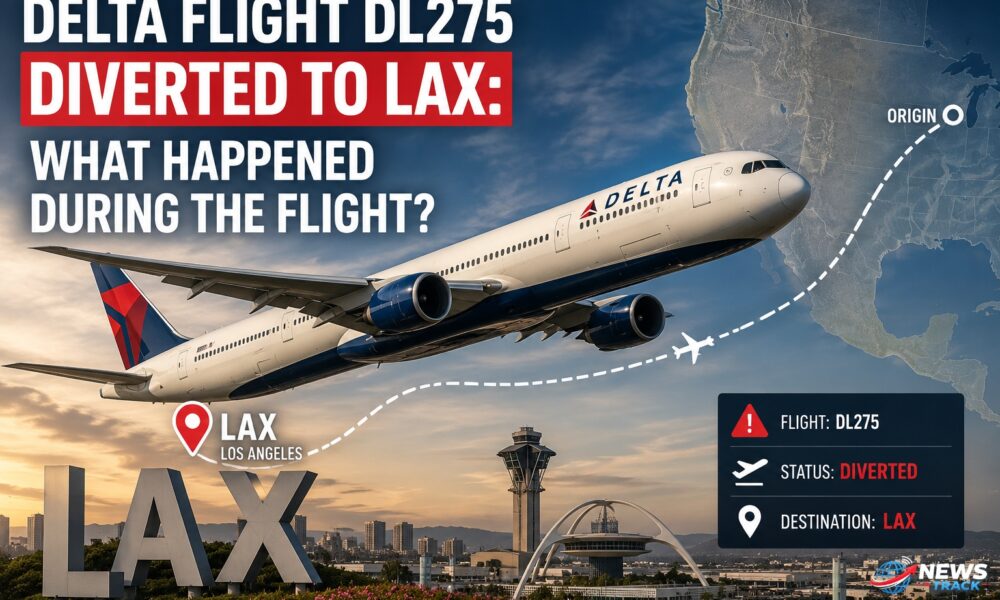
Delta flight dl275 diverted lax! A routine international trip can quickly transform into a complex logistical challenge when technical difficulties arise mid-air. On May 27, 2025, passengers boarding a long-haul aircraft expected to wake up in Tokyo. Instead, their journey took a massive detour back to the United States west coast, capturing the attention of aviation enthusiasts and cautious travelers alike.
Table Of Content
This specific route was supposed to connect the Midwest to the heart of Japan. The aircraft was heavily fueled, packed with over three hundred passengers, and ready for a smooth Pacific crossing. When the crew identified a critical system error, they had to make a rapid, highly calculated decision to abandon the original flight path.
Understanding the mechanics behind this emergency landing reveals a lot about modern airline operations. By examining the timeline, the technical failures, and the crew’s response, we can gain a clearer perspective on how airlines prioritize passenger well-being over schedule adherence. Here is the complete breakdown of what caused the unexpected reroute, how it impacted the people on board, and what it means for the future of flight safety.
Details of the Incident
Delta Flight DL275 was a scheduled international route from Detroit Metropolitan Wayne County Airport (DTW) to Tokyo Haneda Airport (HND). The aircraft assigned to this route was an Airbus A350-900, bearing the registration number N508DN. The flight initially took off at 15:53 local time, slightly behind schedule due to a delayed inbound flight from Amsterdam.
The first few hours of the journey proceeded without any notable events. The widebody twinjet climbed to a cruising altitude of 38,000 feet, flying over the vast expanses of the North Pacific and the Bering Sea. Approximately 620 nautical miles southwest of Anchorage, Alaska, the flight deck received an alert regarding one of the aircraft’s critical systems.
Rather than continuing across the ocean or diverting to a closer but less equipped airport like Anchorage, the pilots initiated a massive turnaround. The aircraft flew for another five hours to reach Southern California. After a grueling 12 hours and 15 minutes in the air, the Airbus A350 landed safely on Runway 06R at Los Angeles International Airport (LAX) at 01:08 AM on May 28.
Causes of Diversion
Delta flight dl275 diverted lax! The primary cause of this massive detour was a malfunction within the engine anti-ice system. The Airbus A350-900 is powered by massive Rolls-Royce Trent XWB engines. At cruising altitudes, temperatures routinely drop well below freezing, and aircraft frequently fly through moisture-rich clouds. The anti-ice system is designed to prevent ice accumulation on critical engine components, ensuring uninterrupted airflow and preventing severe internal damage from ingested ice blocks.
When the system monitoring the engine anti-ice functionality reported a fault, the pilots faced a serious operational limitation. Without a reliable anti-ice system, flying through freezing atmospheric conditions over an isolated ocean poses an unacceptable risk. An engine failure over the Pacific Ocean leaves pilots with very few emergency landing options.
The decision to divert was a direct response to this technical limitation. The crew needed an airport that offered favorable weather, a long enough runway for a heavy aircraft, and most importantly, the right maintenance infrastructure to repair a complex Rolls-Royce engine. Los Angeles International Airport checked all of these boxes perfectly.
Passenger and Crew Accounts
Spending over twelve hours on an airplane only to land in the same country you departed from is undeniably frustrating. However, initial accounts from the cabin suggest a surprisingly calm atmosphere. Passengers noted that the flight attendants maintained a highly professional demeanor, ensuring everyone remained seated and informed throughout the lengthy detour back to the mainland.
The pilots communicated the necessity of the diversion clearly, explaining that a technical issue required them to land at a specialized maintenance hub. Social media posts from those on board praised the crew’s transparency. While the exhaustion of a twelve-hour flight to nowhere was evident, the prevailing sentiment among passengers was relief that the crew prioritized their safety over attempting a risky ocean crossing.
Airline Response
Delta Air Lines handled the diversion of DL275 with a focus on immediate safety and subsequent passenger recovery. Once the aircraft touched down at LAX, the airline’s ground teams mobilized to assist the displaced travelers. The carrier absorbed an estimated $2.3 million in costs associated with the diverted flight, factoring in wasted fuel, extended crew hours, maintenance diagnostics, and passenger compensation.
The airline coordinated directly with Rolls-Royce engineers stationed at the LAX hub to diagnose the anti-ice system failure. By selecting an airport with extensive Delta maintenance operations and 24/7 Rolls-Royce support, the airline ensured the aircraft could be inspected and repaired as efficiently as possible.
Impact on Passengers
The immediate fallout for the passengers of DL275 involved significant travel disruptions. Arriving at LAX in the early hours of the morning meant missing connecting flights in Tokyo and losing at least a full day of travel time. Travelers were forced to navigate a busy terminal to secure new itineraries.
Delta provided support by rebooking passengers on subsequent flights from Los Angeles to Tokyo. For those requiring overnight stays due to flight availability, the airline issued hotel vouchers and meal allowances. Despite these accommodations, the delay caused inevitable stress, especially for those traveling for time-sensitive business meetings or tightly scheduled vacations.
Aviation Safety Protocols
This event is a textbook example of how strict aviation safety protocols protect human lives. Long-haul flights operating over oceans are governed by ETOPS (Extended-range Twin-engine Operations Performance Standards). These regulations dictate how far a twin-engine aircraft can fly from a suitable diversion airport at any given time.
When a critical system like the engine anti-ice mechanism fails, the aircraft’s safety margins are significantly reduced. The protocol mandates that the flight crew must evaluate their nearest suitable options. While airports in Alaska or Northern Canada were geographically closer, a “suitable” airport must also be able to handle the specific aircraft type safely.
LAX was deemed the safest choice because of its long runways, comprehensive emergency services, and deep maintenance capabilities. Landing a heavily fueled A350 requires an airport equipped to handle high-weight arrivals and potential brake overheating. The crew’s decision strictly adhered to established safety management systems, proving that these protocols function exactly as intended under pressure.
Broader Implications
The diversion of DL275 highlights a growing conversation within the aviation industry regarding predictive maintenance. While the pilots made the correct reactive decision, experts suggest that advanced technology could prevent these situations entirely. Artificial intelligence and machine learning algorithms are increasingly being integrated into engine health monitoring systems.
These advanced analytics can track minuscule anomalies in engine performance data, potentially predicting a system failure hours before a flight takes off. If an AI-driven diagnostic tool had flagged the anti-ice system irregularity during the aircraft’s turnaround time in Detroit, the airline could have swapped the plane. This would have saved millions of dollars and spared hundreds of passengers from a major disruption.
As airlines continue to expand their long-haul networks, the reliance on smart, proactive technology will become a necessity. Minimizing mid-air component failures through predictive analytics is the next major frontier for global aviation efficiency.
ALSO READ : United Airlines Flight UA770 Emergency Diversion
The Value of Precautionary Landings
A $2.3 million detour is a massive operational hurdle, but it is a small price to pay for the safety of hundreds of passengers and crew members. The flight from Detroit to Tokyo may not have reached its intended destination on schedule, but it arrived safely on the ground thanks to a highly trained flight deck and rigid safety protocols.
As aircraft technology becomes more sophisticated, airlines will continue to refine their maintenance strategies to catch errors before they leave the runway. Until predictive systems are flawless, travelers can take comfort in knowing that when a system alerts a crew to danger, the immediate response is always to find the safest path back to earth.








No Comment! Be the first one.