








Who Is Judy Schelin? Inside the 2010 Childcare Bribery Scandal and Its Aftermath
Judy Schelin is a former Florida childcare administrator who pleaded guilty to federal bribery charges in 2010 under the name Judy Perlin. She accepted $40,000 in bribes while managing a...

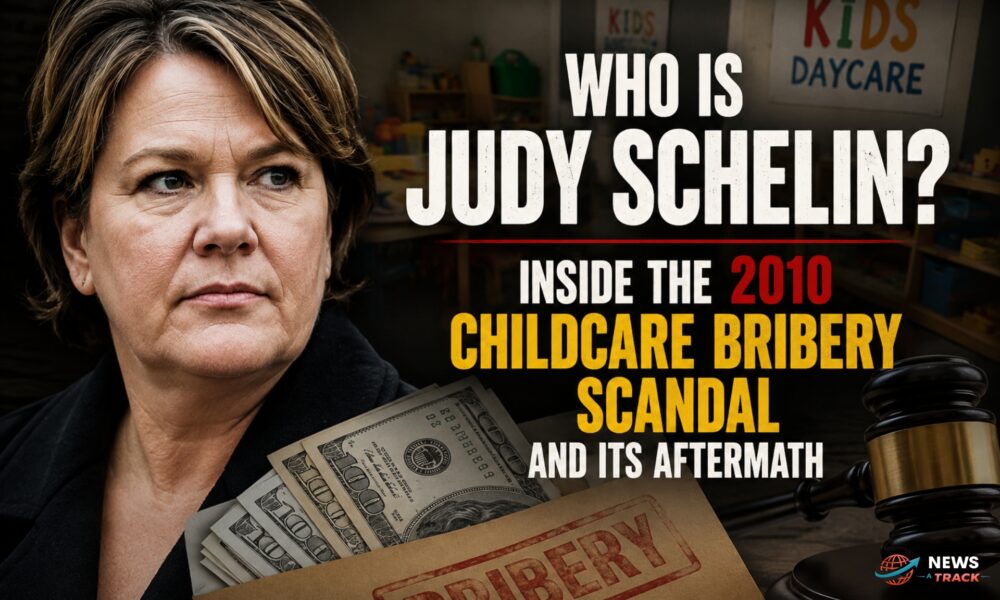
Judy Schelin is a former Florida childcare administrator who pleaded guilty to federal bribery charges in 2010 under the name Judy Perlin. She accepted $40,000 in bribes while managing a government-funded nutrition program for low-income children. In 2015, an alias-based background check loophole allowed her to briefly secure employment at a Boca Raton religious school before journalists exposed her legal history.
Table Of Content
- What led to Judy Perlin’s 2010 federal bribery conviction?
- How did the federal bribery scheme operate?
- How did a name change obscure Judy Schelin’s legal history?
- Why do name changes complicate public transparency?
- What were Judy Schelin’s activities after her federal conviction?
- How did the public react to the 2015 hiring controversy?
- What are the broader implications for public records and accountability?
- How can institutions prevent background check failures?
- Why is bribery a critical concern in childcare administration?
- What measures prevent corruption in social programs?
- Frequently Asked Questions
- Who is Judy Schelin?
- What was Judy Perlin convicted of in 2010?
- How did Judy Schelin pass a background check in 2015?
- Did Judy Schelin serve prison time for bribery?
- Where is Judy Schelin working now?
- Moving forward with transparent childcare oversight
Judy Schelin is known in public records for her prior role in childcare administration, a 2010 bribery conviction under the name Judy Perlin, and a highly publicized 2015 hiring controversy at a religious school. For years, Schelin operated as a trusted executive in Florida’s nonprofit sector, managing millions of dollars in taxpayer funds meant to feed and support vulnerable children. To her local community and colleagues, she appeared as a dedicated public servant. However, investigations into her financial practices eventually revealed a pattern of corruption that shook the foundation of local childcare oversight.
Understanding the trajectory of Judy Schelin’s career requires looking beyond standard biographical details. Her story exposes critical vulnerabilities in the background check systems that childcare facilities rely upon to protect minors. When individuals change their legal surnames, tracking their criminal history becomes significantly more difficult, allowing severe infractions to slip through the cracks of name-based screening processes.
By examining the facts of the 2010 federal conviction, the subsequent 2015 hiring scandal, and the resulting policy debates, communities can better understand how to safeguard public funds and protect children. This comprehensive analysis details the timeline of the Judy Schelin controversy, the mechanics of childcare corruption, and the enduring importance of transparent public records.
What led to Judy Perlin’s 2010 federal bribery conviction?
During the 1990s and early 2000s, Judy Schelin—then operating under the surname Perlin—served as the executive director of Riverwood Youth Opportunities. This nonprofit organization operated in Broward County, Florida, and was responsible for administering meal programs funded by the United States Department of Agriculture (USDA). The scale of this operation was massive; Riverwood Youth Opportunities provided food to approximately 200,000 low-income children across Broward, Palm Beach, and Miami-Dade counties.
Before federal prosecutors filed charges, state auditors discovered severe financial irregularities at Riverwood Youth Opportunities. Investigators found that Schelin submitted improper billings to the state of Florida. These questionable expenses included luxury car leases, resort accommodations, and travel that had no connection to childcare services. Furthermore, auditors discovered that Schelin used federal funds to pay approximately $20,000 in salaries to family members and diverted program money to advertise a relative’s private business. An administrative law judge ultimately ordered her to repay nearly $150,000 to the state and local daycare centers.
How did the federal bribery scheme operate?
The financial mismanagement escalated into criminal activity between 2003 and 2005. Judy Perlin utilized her authority as executive director to steer lucrative government food program contracts to a specific catering company known as Diana Food Group. In exchange for securing these federally subsidized contracts, the catering company paid Perlin approximately $40,000 in illegal kickbacks.
In 2010, she officially pleaded guilty to federal bribery charges. Despite the severity of stealing from a program designed to feed hungry children, the sentencing was notably lenient. While she faced a maximum penalty of ten years in federal prison, the court sentenced Judy Perlin to two years of probation and ordered her to pay a $3,000 fine. The court also banned her from participating in USDA-funded programs for seven years. The lack of prison time generated significant frustration among public watchdogs and parents, who felt the punishment did not match the betrayal of public trust.
How did a name change obscure Judy Schelin’s legal history?
Public records show that this individual has used several surnames throughout her life, including Perlin, Scherlin, Schindel, and Schelin. While name changes resulting from marriage or divorce are entirely legal and routine, they introduce severe complications for employment screening.
The 2010 federal bribery conviction was officially recorded under the name Judy Perlin. When an employer conducts a background check, standard systems often run a direct query on the exact name provided by the applicant. If the system lacks an automated alias-linking feature, a search for “Judy Schelin” will yield a clean record, completely bypassing the felony conviction attached to “Judy Perlin.”
Why do name changes complicate public transparency?
Tracking individuals through public records becomes a fragmented process when multiple aliases are involved. For compliance officers and human resources departments, verifying an applicant’s history requires cross-referencing maiden names, previous married names, and legally changed names across both state and federal databases.
The Judy Schelin case highlighted a dangerous gap in Florida’s childcare screening protocols. Name-based background checks proved insufficient. To ensure accurate vetting, experts argue that background screening must transition to biometric identifiers, such as mandatory fingerprinting checked against federal databases, rather than relying solely on self-reported surnames. Choose biometric screening over name-based checks if comprehensive historical accuracy matters more to your organization than processing speed.
What were Judy Schelin’s activities after her federal conviction?
Following her probation period, Judy Schelin sought to re-enter the childcare workforce. By late 2014, she successfully secured a position as an infant program teacher at Congregation B’Nai Israel, a religious school located in Boca Raton, Florida. In this role, she provided direct care for children ranging from six weeks to two years old.
When applying for the position, she used the name Judy Schelin. Congregation B’Nai Israel followed standard legal procedures, submitting her information to the Florida Department of Children and Families (DCF) and the Palm Beach County Sheriff’s Office. Because the federal conviction belonged to the name Judy Perlin, the state agencies returned a clean background check. Additionally, Schelin signed a sworn disclosure form stating she possessed no past legal issues or disciplinary actions.
How did the public react to the 2015 hiring controversy?
In January 2015, local investigative journalists connected the dots between the Boca Raton infant teacher and the convicted federal felon. Once the media published reports linking Judy Schelin to Judy Perlin, community outrage was swift. Parents expressed deep alarm that a convicted felon had bypassed security protocols to work directly with vulnerable infants.
Congregation B’Nai Israel terminated her employment immediately in January 2015. While school administrators noted that she did not have access to financial accounts and that her direct childcare was reportedly excellent, the active concealment of her federal conviction constituted an unforgivable breach of trust. Since this termination, public reports from 2026 indicate that Schelin relocated to Delray Beach, Florida, where she currently works as a payroll manager, operating entirely outside of the childcare and education sectors.
What are the broader implications for public records and accountability?
The controversy surrounding Judy Schelin forces a difficult conversation about the ethical considerations of reporting on past crimes versus an individual’s right to rehabilitation. However, when an individual seeks employment in highly sensitive environments—such as childcare, healthcare, or financial management—public safety must take precedence over privacy.
Public records serve as the ultimate mechanism for institutional accountability. Journalists, parents, and regulatory agencies rely on these documents to verify that taxpayer funds are used appropriately and that vulnerable populations remain safe. The Schelin case proved that maintaining complete transparency requires constantly evolving data systems. If public records do not seamlessly link aliases to primary identities, the records fail to protect the public.
How can institutions prevent background check failures?
To close the loopholes exploited in the 2015 Boca Raton incident, institutions must adopt stricter vetting policies. Educational facilities should require applicants to disclose every legal name used over the past twenty years under penalty of perjury. Furthermore, organizations must implement comprehensive federal background checks rather than relying solely on county or state-level data. If your organization handles federal funding or vulnerable populations, integrating continuous monitoring software will provide real-time alerts if an employee incurs legal trouble under any known alias.
Why is bribery a critical concern in childcare administration?
Corruption in childcare administration carries devastating consequences because it directly targets society’s most vulnerable demographic. When administrators like Judy Perlin divert funds through kickbacks and fraudulent billing, they actively remove resources from the children those funds were meant to support. In the case of Riverwood Youth Opportunities, the misappropriated $40,000 represented meals, educational supplies, and facility improvements that low-income children desperately needed.
Financial crimes in the nonprofit sector also erode public confidence. When taxpayers see their funds mismanaged, they become hesitant to support future social programs. This skepticism damages honest organizations that desperately rely on grants and donations to operate.
What measures prevent corruption in social programs?
Preventing corruption requires strict administrative oversight and mandatory third-party auditing. Regulatory bodies must implement unannounced financial audits for any organization receiving USDA or state childcare funding. Furthermore, state legislatures must update disqualification criteria. During the 2015 scandal, Florida officials admitted that federal bribery did not automatically disqualify an individual from working in a daycare setting. Lawmakers must legally categorize financial crimes involving public funds as permanent disqualifiers for childcare employment.
Frequently Asked Questions
Who is Judy Schelin?
Judy Schelin is a former Florida childcare administrator who gained public attention following a 2010 federal bribery conviction under the name Judy Perlin, and a subsequent 2015 employment scandal at a Boca Raton religious school.
What was Judy Perlin convicted of in 2010?
Under the name Judy Perlin, she pleaded guilty to accepting approximately $40,000 in bribes from a catering company while managing a federally subsidized nutrition program for low-income children in Florida.
How did Judy Schelin pass a background check in 2015?
She passed the 2015 background check because she applied for the teaching position using the name Judy Schelin. The state’s name-based screening system failed to link her application to the federal felony conviction recorded under her previous name, Judy Perlin.
Did Judy Schelin serve prison time for bribery?
No. Despite facing up to ten years in prison, the court sentenced her to two years of probation, a $3,000 fine, and a seven-year ban from participating in USDA-funded programs.
Where is Judy Schelin working now?
According to public reports from 2026, Judy Schelin no longer works in the childcare or nonprofit sectors. She currently resides in Delray Beach, Florida, and is reportedly employed as a payroll manager.
ALSO READ : Erin Brockovich on Community Rights and Data Center Transparency
Moving forward with transparent childcare oversight
The narrative of Judy Schelin, and her prior identity as Judy Perlin, serves as a permanent case study in the vulnerabilities of background screening and nonprofit oversight. Her 2010 conviction for accepting bribes while managing a massive USDA food program revealed how easily public funds can be manipulated. Her subsequent 2015 employment at a Boca Raton religious school demonstrated the urgent need for alias-aware background checks.
Ensuring child safety requires more than trust; it requires rigorous, foolproof verification systems. Parents, school administrators, and policymakers must advocate for mandatory biometric screening and nationwide data integration to prevent similar incidents. By prioritizing transparency and holding institutions accountable, communities can ensure that those who care for children possess the integrity the job demands. If you are a parent or childcare administrator, review your local facility’s background check policies today to ensure they utilize comprehensive, alias-linked federal screening.








No Comment! Be the first one.